
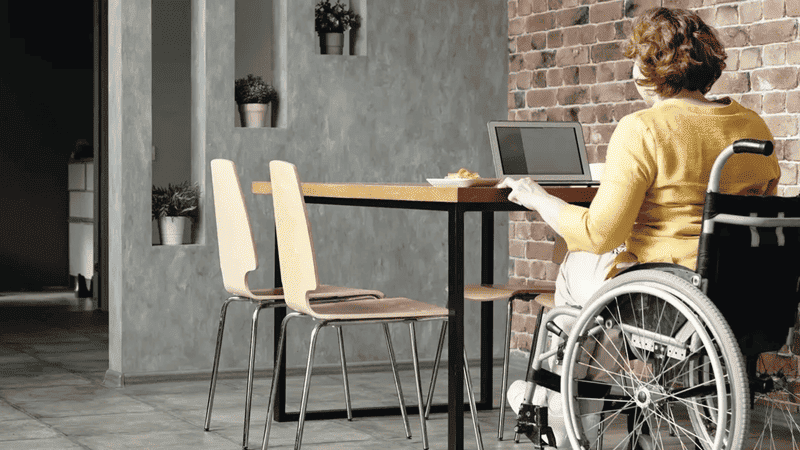
If you or someone you care for lives with a significant disability in Melbourne, Supported Independent Living (SIL) may be one of the most meaningful NDIS supports available. It is the kind of practical, day-to-day assistance that helps people live in their own home — or a shared supported setting — with dignity and real choice.
But navigating SIL, SDA, NDIS funding, aged care, and community health services can feel overwhelming. What is the difference between SIL and SDA? Who actually qualifies? Does funding cover rent? These are the questions families and participants across Melbourne ask every day — and this guide is built around those exact questions.
As a registered NDIS provider and home care service in Melbourne, Miracle Health Services works alongside participants, families, and carers to make these pathways clearer and more accessible.

What Is Supported Independent Living and How Does It Work in Melbourne?
Supported Independent Living is a category of NDIS funding that pays for the support workers who help you with everyday tasks — not the accommodation itself. It is designed for people with disability who need support throughout the day and sometimes overnight to live as independently as possible.
In Melbourne, SIL is delivered across a range of living arrangements: in your own home, in a shared house with other NDIS participants, or in purpose-built Specialist Disability Accommodation (SDA). The support can include help with personal care, meal preparation, medication reminders, household tasks, and community participation.
SIL is distinct from other NDIS supports because it is typically a high-intensity support line item — meaning the NDIS requires detailed evidence of your daily support needs before it is approved. It is not automatically included in every NDIS plan, and the process of getting it funded requires proper documentation and assessment.
Who Qualifies for Supported Independent Living in Melbourne?
This is the first question most people ask — and the answer is more specific than many expect. SIL is not available to all NDIS participants. It is approved for people who meet particular criteria around their support needs and living situation.
Core Eligibility Indicators for SIL Funding
- You are an active NDIS participant with a permanent and significant disability
- Your disability substantially reduces your functional capacity in daily activities
- You require daily living support that cannot be reasonably met by family or other informal supports
- You need support from paid workers to complete tasks such as personal care, meal preparation, or overnight supervision
- Your support needs have been assessed by your NDIS planner, LAC, or a qualified allied health professional
- SIL has been determined to be a reasonable and necessary support in your specific circumstances
It is important to note that the NDIS assesses each individual separately. Having a diagnosis alone does not qualify a person for SIL. The NDIS looks at functional impact — what you can and cannot do, and what support is genuinely needed. Your Support Coordinator at Miracle Health Services can help you gather the evidence and functional assessments needed to build a compelling case for SIL funding.
SIL vs SDA — What Is the Actual Difference?
Confusing SIL and SDA is one of the most common misunderstandings in the disability support space — understandably so, because they often work together but are fundamentally different things.
| Feature | SIL — Supported Independent Living | SDA — Specialist Disability Accommodation |
|---|---|---|
| What it is | Funded support services (workers) | Funded specialist housing (the building) |
| What it pays for | Personal care, meals, overnight support, daily tasks | Contribution toward the cost of the specialist accommodation itself |
| Does it cover rent? | No — SIL does not cover rent | Partially — SDA reduces accommodation cost; participant still pays a Reasonable Rent Contribution |
| Who needs it | People needing daily in-home support | People with extreme functional impairment or very high support needs requiring specialist housing |
| Can you have both? | Yes — many participants receive both SIL and SDA. They are separate funding streams. | |
Many Melbourne families discover that their loved one qualifies for SIL without SDA — for example, living in a private rental with a housemate and funded support workers. Equally, some participants live in SDA properties and receive their SIL funding from a separate provider. The two can — and often do — operate independently.
What Are the 4 Types of SDA Housing in Melbourne?
Under the NDIS, SDA is categorised into four design categories. Each is designed to meet different types of disability-related housing needs. Understanding these helps participants and families identify the right fit before engaging with SDA providers.
Improved Liveability
Designed for people with sensory, intellectual, or cognitive impairment. Features improved accessibility and orientation cues throughout the property.
Fully Accessible
For people with significant physical impairment. Wider doorways, fully accessible bathrooms, and physical access features throughout.
Robust
For people with complex behaviours requiring a resilient, reinforced home environment. Designed to reduce risk to participants and support workers.
High Physical Support
For people with significant physical impairment requiring ceiling hoists, emergency backup power, and high-technology home features.
Eligibility for SDA — and which design category is appropriate — is assessed through functional reports from occupational therapists, physiotherapists, and other qualified allied health professionals. The NDIS uses this evidence to determine what type of SDA, if any, is reasonable and necessary in your plan.
Do You Pay Rent in SDA? How Does It Work?
Yes — SDA participants are expected to contribute toward accommodation costs. This is called the Reasonable Rent Contribution (RRC). It is typically calculated as a proportion of the Disability Support Pension and Commonwealth Rent Assistance a participant receives.
The SDA funding in your NDIS plan then bridges the gap between your RRC and the actual cost of the SDA property. This is different from typical rental arrangements — you are not paying the full market rent, and your contribution is structured in accordance with NDIS pricing guidance.
Importantly, SIL funding does not contribute to rent or accommodation costs under any circumstances. If you are exploring supported accommodation options in Melbourne, it is essential to understand these two separate funding streams and how they interact in your individual plan.
How Long Can You Live in Supported Accommodation?
There is no fixed time limit for living in supported accommodation under the NDIS. SDA tenancies are intended to be long-term arrangements. As an SDA tenant in Victoria, you hold standard tenancy rights under the Residential Tenancies Act 1997 (Vic) — including rights relating to lease security, notice periods, and property maintenance.
You can remain in your SDA home for as long as:
- Your NDIS plan continues to include SDA and/or SIL funding, which is reviewed at each plan renewal
- The property continues to meet your disability-related housing needs
- You and the SDA provider maintain a valid tenancy agreement
- No significant change in your circumstances alters your NDIS eligibility
NDIS plans are typically reviewed annually or when your circumstances change significantly. At each review, the NDIA reassesses whether SDA continues to be a reasonable and necessary support for your situation.
Can I Live With My Family in SDA Housing?
This is a question that comes up frequently — and while SDA is designed specifically for eligible participants, you can live with family members who do not have a disability. Under NDIS rules, participants are permitted to share an SDA home with their partner, children, or parents.
When you live with family, the NDIA applies specific pricing adjustments to the provider’s funding. The family members without a disability do not receive NDIS funding, and any adult relatives will contribute their own share of rent directly to the provider. Each living arrangement must be negotiated individually with your SDA provider.
If your goal is to live close to family while receiving support, there are also alternative pathways — such as SIL funding in a private rental setting or a combination of home care supports — that Miracle Health Services can help you explore.
What Are the Most Common Disabilities Supported Under the NDIS?
The NDIS supports Australians with a wide range of permanent and significant disabilities. While every person’s experience is individual, the most commonly represented primary disability groups across the NDIS scheme include:
- Autism Spectrum Disorder (ASD)
- Intellectual Disability
- Psychosocial Disability — related to mental health conditions
- Cerebral Palsy
- Acquired Brain Injury (ABI)
- Sensory and Speech Impairment — vision, hearing, communication
- Physical and Diverse Disability
- Neurological Conditions — including multiple sclerosis and Parkinson’s disease
- Down Syndrome
- Spinal Cord Injury
Each of these conditions can present very differently from person to person. The NDIS does not fund based on diagnosis — it funds based on functional impact. For current NDIS data on participant demographics and disability types, refer to the NDIS Quarterly Reports published by the NDIA.

AI Generated — NDIS participants and support workers connecting in a Melbourne community space, reflecting the diversity of disability support needs across Victoria.
Disability Support and Home Care Services in Melbourne — What Miracle Health Provides
Miracle Health Services is a registered NDIS provider, aged care service provider, and community health organisation based in Craigieburn, Melbourne. The team works with participants, older Australians, and veterans across Melbourne to deliver a coordinated range of supports — from intensive disability care to community nursing and in-home aged care.
Below is an overview of the service areas Miracle Health covers, all delivered with local Melbourne knowledge and a person-centred approach.
SIL and SDA Support
Supported Independent Living and Specialist Disability Accommodation guidance, coordination, and daily living support for NDIS participants across Melbourne.
NDIS Support Coordination
Help navigating your NDIS plan, connecting with providers, resolving issues, and building your capacity to manage your own supports over time.
Disability Support Services
Personalised disability support including personal care, community access, skill development, and daily living assistance for NDIS participants.
Community Nursing
Qualified community nurses delivering clinical care in your home — wound care, medication management, health monitoring, and chronic condition support.
Home Care Services and Packages
Government-funded and privately funded home care for older Australians in Melbourne — personal care, domestic support, and wellness services.
Aged Care Melbourne
Support at home for older Australians through CHSP, Home Care Packages, and private care — helping people remain independent in their own Melbourne home.
DVA Home Support
Specialist in-home support for eligible Australian veterans and war widows and widowers through the Department of Veterans’ Affairs programmes.
Hospital to Home
Transitional care support to help people return safely from hospital to their Melbourne home, with nursing and personal care during recovery.
Behavioural Support
Registered positive behaviour support practitioners delivering behavioural assessment and support planning for participants with complex support needs.
Innovative Community Participation
Creative, community-based programmes that support NDIS participants to build connections, skills, and social engagement across Melbourne.
Assist Travel and Transport
Transport assistance for NDIS participants to attend appointments, access community activities, and maintain independence across Melbourne.
Household Tasks and Daily Living
Practical support with cleaning, meal preparation, laundry, and home maintenance — helping participants and older Australians maintain a safe, comfortable home.
Aged Care Services in Melbourne — Understanding Your Options
For older Australians who want to remain at home, the key government-funded pathways are the Commonwealth Home Support Programme (CHSP) and Home Care Packages (HCP). For older Australians with more complex care needs, the Support at Home program replaces the older Home Care Packages framework. This updated program features an eight-level funding classification system to provide more precisely tailored, intensive support. Services are consumer-directed, granting you choice over how your budget is used and which provider you engage. Miracle Health Services is an approved provider under this reformed program. These are coordinated through My Aged Care, the Australian Government’s central access point for aged care services.
Commonwealth Home Support Programme (CHSP)
The CHSP provides entry-level support for older Australians who need some assistance to remain living at home. This can include domestic assistance, personal care, social support, meal delivery, and transport. It is needs-assessed and is designed for people with lower-level support needs who benefit from targeted assistance to stay independent.
Home Care Packages
Home Care Packages are designed for older Australians with more complex care needs. There are four levels of Home Care Package, with higher levels providing more intensive support. Packages are consumer-directed — meaning you have genuine choice in how your budget is spent and which provider you engage. Miracle Health Services is an approved Home Care Package provider in Melbourne.
Privately Funded Aged Care Services
Not all aged care support requires government funding. Privately funded services are available for older Australians who are not yet eligible for government-funded programmes, are waiting for package allocation, or prefer to self-fund additional services. Miracle Health Services offers flexible private care options across Melbourne.

DVA Home Support for Veterans in Melbourne
Australian veterans and eligible war widows and widowers in Melbourne may access in-home support services through the Department of Veterans’ Affairs (DVA). These services are separate from the NDIS and aged care systems and are governed by DVA’s own eligibility and entitlement frameworks.
DVA-funded services can include personal care, domestic assistance, nursing care, and allied health support delivered in a veteran’s home. Miracle Health Services works with eligible DVA clients across Melbourne to coordinate and deliver these supports respectfully.
For information on DVA entitlements, visit the Department of Veterans’ Affairs official website or contact Miracle Health Services to discuss your eligibility.
Hospital to Home — Supporting Safe Transitions Across Melbourne
Returning home from hospital can be one of the most vulnerable periods for older Australians and people with disability. The first days and weeks after discharge carry a heightened risk of readmission when appropriate in-home support is not in place.
Miracle Health Services provides coordinated hospital to home care across Melbourne — working with hospital discharge teams, GPs, and families to ensure a safe, supported return home. Services can include nursing care, personal care, medication management support, and domestic assistance during the recovery period.
Early engagement with a home care provider before discharge is strongly recommended by healthcare professionals and discharge planning teams across Melbourne’s hospital network.
Behavioural Support — A Positive, Rights-Based Approach
For NDIS participants who experience behaviours of concern, positive behaviour support (PBS) is the evidence-based, rights-focused framework used across Australia. Miracle Health Services provides behavioural support assessment and planning through registered practitioners who take a genuinely person-centred approach.
Behavioural support is not about controlling behaviour — it is about understanding the communication and unmet needs behind it, and building environments and strategies that support wellbeing, safety, and quality of life.
All behaviour support plans involving restrictive practices must comply with the NDIS (Restrictive Practices and Behaviour Support) Rules and applicable Victorian state legislation and authorisation requirements.
Community Nursing and Home Health Nursing Services in Melbourne
Community nursing — also called home health nursing — brings qualified clinical care directly to people in their own homes across Melbourne. This is a vital service for people who find it difficult to attend clinic appointments regularly, and for those managing complex health conditions that require ongoing monitoring and skilled clinical input.
Miracle Health Services’ community nurses are registered with the Australian Health Practitioner Regulation Agency (AHPRA) and provide a range of in-home clinical services including:
- Wound assessment and management
- Medication administration and management support
- Chronic condition monitoring — including diabetes, cardiac, and respiratory conditions
- Post-surgical care and recovery support
- Catheter care and continence management
- Palliative and end-of-life care coordination
- Health education and self-management coaching
- Functional assessments in the home environment
Frequently Asked Questions About Supported Independent Living Melbourne
How much does Supported Independent Living cost?
SIL support is funded through your NDIS plan and calculated based on the intensity and hours of support required, the type of living arrangement, and the specific support categories approved. The NDIS does not publish a flat rate for SIL because every participant’s support profile is different. Speak with your NDIS planner or Support Coordinator for guidance specific to your situation. This article does not include pricing information.
Can I choose who provides my SIL support?
Yes. As an NDIS participant, you have the right to choose your SIL provider. You can change providers if your current arrangement is not meeting your needs, subject to notice periods in your service agreement. The NDIS supports participant choice and control at every level of service delivery.
What is the difference between Home Care Packages and NDIS disability support?
While the NDIS provides customized, non-means-tested support for people under 65 with permanent disabilities, the aged care system focuses on seniors (65+) managing age-related decline. On November 1, 2025, the old Home Care Packages were replaced by the Support at Home programme which introduced eight funding classifications and quarterly budgeting. Unlike the flexible NDIS, Support at Home utilizes government-defined service lists and applies means-testing for everyday tasks, though clinical and personal care remain fully funded.
What is Innovative Community Participation under the NDIS?
Innovative Community Participation is an NDIS support category that funds creative and community-based programmes to help participants build skills, social connections, and community engagement in ways that go beyond traditional day programme models. It is designed to support genuine inclusion and active participation in Melbourne community life.
How do I access NDIS Support Coordination through Miracle Health Services?
If your NDIS plan includes Support Coordination funding, you can engage Miracle Health Services as your Support Coordinator. Contact the team directly via phone or email to discuss your plan and how coordination support can help you get the most from your NDIS funding.
What is the CHSP programme and who is it for?
The Commonwealth Home Support Programme (CHSP) provides entry-level in-home support for older Australians who need basic assistance to remain living independently at home. It is coordinated through My Aged Care and covers services such as domestic assistance, personal care, social support, and meals. It is generally for people who need less intensive support than a Home Care Package provides.
Does Miracle Health Services offer private self-funded care?
Yes. For people who are not yet eligible for government-funded programmes, are waiting for funding, or wish to supplement their existing plan with additional services, Miracle Health Services provides privately funded care options across Melbourne. Contact the team to discuss available services and arrangements.
What transport support is available for NDIS participants in Melbourne?
The Assist Travel and Transport support category under the NDIS can help participants travel to appointments, access community activities, and build independence in getting around Melbourne. Miracle Health Services can assist NDIS participants to access and utilise transport support included in their plan.
Why Melbourne-Based Disability Support Services Make a Difference
Choosing a Melbourne-based provider for Supported Independent Living, aged care, or disability support services is about more than convenience. It means your support team understands the local service landscape — the available SDA properties, the community nursing networks, the transport options, and the local allied health and specialist services that connect to your care.
It also means faster response times, genuine community connection, and the ability to build the kind of consistent, trusting relationships that underpin good disability and aged care support. Miracle Health Services is based in Craigieburn and serves participants and clients across Melbourne’s northern, north-western, and broader metropolitan areas.
The team brings genuine local knowledge to every service — from navigating Melbourne’s public transport network for assist travel support, to coordinating with Melbourne hospital discharge teams for hospital to home transitions.
How to Get Started With Supported Independent Living in Melbourne
If you are an NDIS participant or a family member exploring SIL, SDA, or disability support services in Melbourne, here are the practical first steps:
- Contact the NDIS or your Local Area Coordinator (LAC) to discuss whether SIL is likely to be appropriate for your situation. If you do not have an NDIS plan, contact the NDIS on their official website to explore eligibility.
- Gather functional assessments from your GP, occupational therapist, physiotherapist, or other allied health professionals. These are essential for SIL and SDA applications.
- Engage a Support Coordinator who can help you navigate the process, prepare your SIL quote request, and identify suitable providers and properties in Melbourne.
- Research SIL providers in Melbourne who are registered with the NDIS Quality and Safeguards Commission. Check the NDIS Provider Register for registered providers.
- Contact Miracle Health Services to discuss your needs, your plan, and how the team can support your journey toward greater independence in Melbourne.
Useful Official Resources
Contact Miracle Health Services — Melbourne
Level 1 Suite 3/420-440 Craigieburn Rd
Craigieburn VIC 3064
8:00 am – 4:00 pm